











The Future of Work: Designing Corporate Offices That Inspire Productivity & Brand Culture
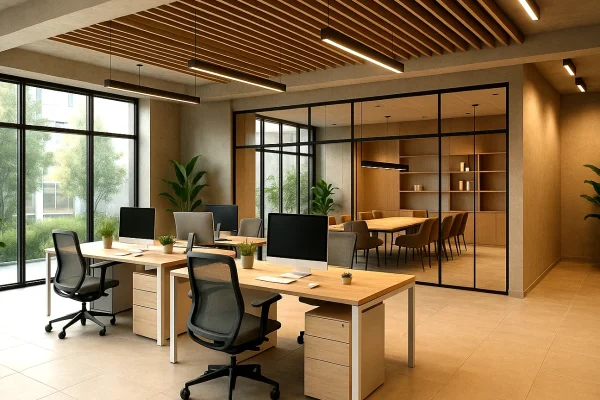
The era of the cubicle farm is over. Today, a corporate office interior design is no longer a fixed cost, it’s your company’s most powerful tool for attracting talent, fostering innovation, and building a tangible brand culture.
But what does a modern, productive office actually look like in 2026? As a leading modern office design company, we’re moving beyond mere aesthetics to create spaces that are intelligent, flexible, and human-centric.
The Shift from “Office” to “Smart Workspace”
The most significant change is the move to smart spaces design. A smart workspace is an environment that uses technology to help employees work better. This isn’t just about fast Wi-Fi. It includes.
- IoT Integration: Smart lighting and climate control that adjust to the time of day and room occupancy, saving energy and improving comfort. (Learn more about IoT in smart buildings from Forbes).
- Data-Driven Layouts: Using sensors to understand which meeting rooms and collaboration zones are actually being used, allowing for a design that reflects how your team truly works. (See how data is reshaping the workplace via HBR).
- Seamless Tech: Integrated video conferencing, wireless charging, and smartboards that make collaboration effortless, whether your team is in-office or remote.
For our clients in hubs like tech office design Bangalore, this is no longer a luxury, it’s a necessity for innovation.
The New ROI: Designing for Employee Well-being
A major corporate office design trend for employee well-being is the understanding that a happy, healthy employee is a productive one. Your office design is a direct message to your team about how much you value them.
- Biophilia: Integrating natural elements like plants, natural light, and wood finishes to reduce stress and improve focus. (This concept is known as Biophilic Design, via ArchDaily).
- Acoustic Comfort: Using high-quality acoustic paneling, quiet zones, and private phone booths to ensure employees can concentrate.
- Neuro-inclusive Design: Creating a variety of spaces (from bustling “town-hall” areas to library-quiet zones) that cater to different work styles and sensory needs. (Explore more on Neuro-inclusive design principles via Gensler).